 Billetterie
 Boutique
Staff
In the footsteps of Adrian Ursea
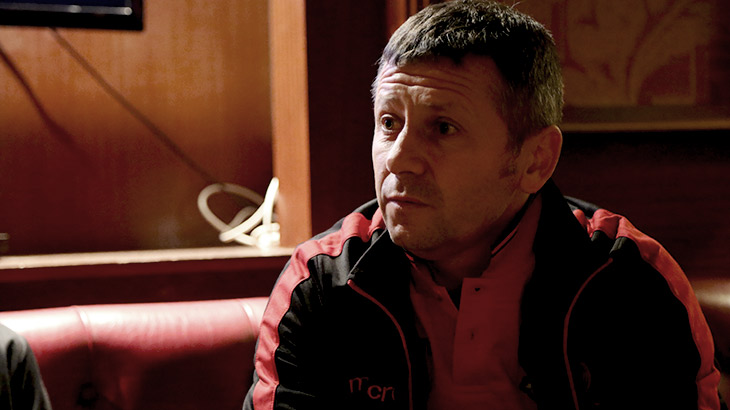
The right words. The right direction. The art of correcting others with a smile. A former Romania international whose career has morphed by turn into that of assistant coach, coach, youth team coach and manager, Adrian Ursea signed on with Le Gym in the summer of 2016. Assistant coach to Lucien Favre, the former Xamax boss (49 years of age) has adapted well, using his experience to calmly execute his functions. Here's a look at the interesting journey that took him from Switzerland to Nice.
"Life is all about new beginnings," wrote the poet, and as we all know, life has been known to imitate art. A former attacking midfielder with a cultured left foot, Adrian left his adoptive nation (he has dual citizenship) this summer after having played there (Locarno, Chénois, Bulle, Vevey, Stade Nyonnais) and coached there, trading mountains for the warm air of the Mediterranean. And he brought with him a wealth of football experience gained from a career full of challenges and reflection. And although the vagaries of being out on the pitch may have accelerated his trajectory, his career was, from day one, built on clarity of ideas.
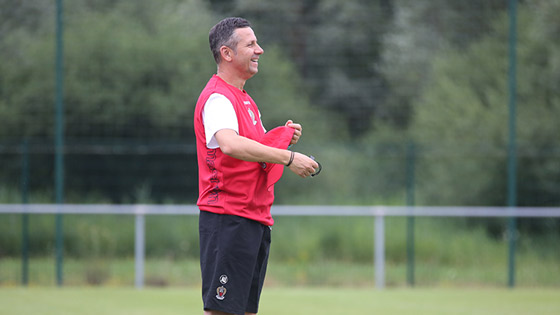
Before completing his coaching qualifications, coach Ursea was suddenly propelled into the hot seat at struggling Geneva club Servette in February 2003, replacing Roberto Morinini the season after Lucien Favre left the club. He contributed to the club's beating the drop to stay in the first division and then returned to his own project, never having lost the thread. "I could have tried to stay at the helm after the first season, but I preferred to be frank with the directors as I thought I could be of more service in the role of assistant coach, helping whomever they signed as new head coach. My objective was to embrace this job, which I love, but not in any old way. To do that, it's like when you're in a league and fighting to be champion: you have to find a way to succeed. I felt a real need to finish my training before taking charge of a team."
A. Ursea: "You have to know how to train players from the ground up"
So, his apprenticeship continued, with Servette continuing to serve as an anchor point. After becoming assistant coach to new boss Marco Schallibaum, he was soon put back in charge to cover the interim from September 2004 to March 2005. At the end of this venture (and the bankruptcy of the club), Adrian moved on. He had a short stint with FC Meyrin before increasing his angles of approach and enlarging his vision of the noblest of sports. He worked with the Swiss U18 and U19 national teams and breathed life into the project of a Swiss military team by taking the reins of the project launched by the federation before accepting a great offer from Neuchâtel in 2007.
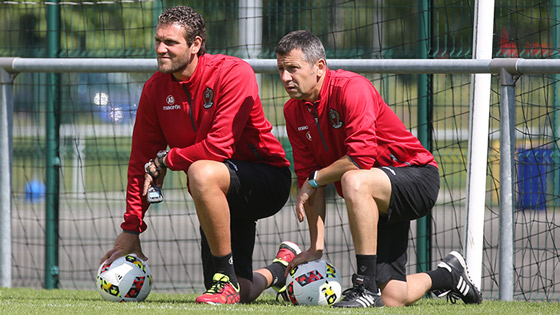
As sporting director, he co-ordinated 35 youth-team coaches with the aim of imbuing the club with a real local identity and improving the performance of the club's youth academy (two elements he was "thrilled to find at Nice"). The club was reeling from financial difficulties but they stayed the course and Ursea's apprenticeship continued. "Supervisor, coach and educator are all different jobs," explained the native of Slobozia. "Obviously, coaching a professional team is the dream, but you have to know how to train players from the ground up. That's what I was missing at Servette, and it's what I found at Xamax. These nine years have been fascinating, and I feel like I've have a good look around."
L. Favre: "We speak the same language"
After crossing paths with Lucien Favre once again in Neuchâtel, the two men agreed to meet up for lunch. "We reinvented the world and we talked about strategy, but there was no job offer," Adrian explained. Favre then signed on at Nice and, after a brief discussion, asked the former playmaker to follow him.
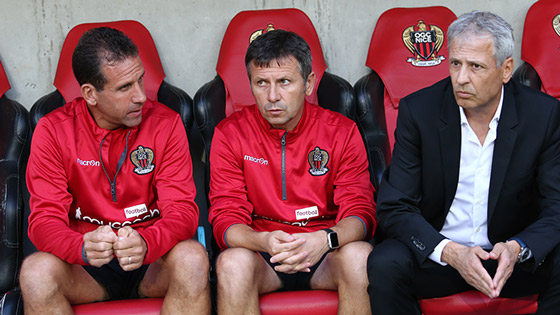
"We knew each other at Servette, 16 years ago," recalled former Swiss international Favre. "When I left to go overseas, there wasn't the opportunity to take him with me. I signed on at Gladbach, for example, with no assistant. Things were different there. I thought of Adrian because we speak the same language; he loves finesse. Sometimes we have the same ideas, sometimes quite the opposite, but we always talk things through and find positive solutions. It's very natural." A natural ease that evidently translates to the Mediterranean coast. "As people, they have settled in here very quickly," explained Fred Gioria in the summer. "They're uncomplicated people who know football; they both have a wealth of experience. But ahead of competence or talent or anything else, the most important thing is the human aspect."
Another side to the job, and yet another that our coaching duo have under control…
C.D.